
When Community Engagement Becomes an Operations Issue
Why engagement decisions affect schedules, costs, and staff capacity.
Dave Reno
9/17/20255 min read
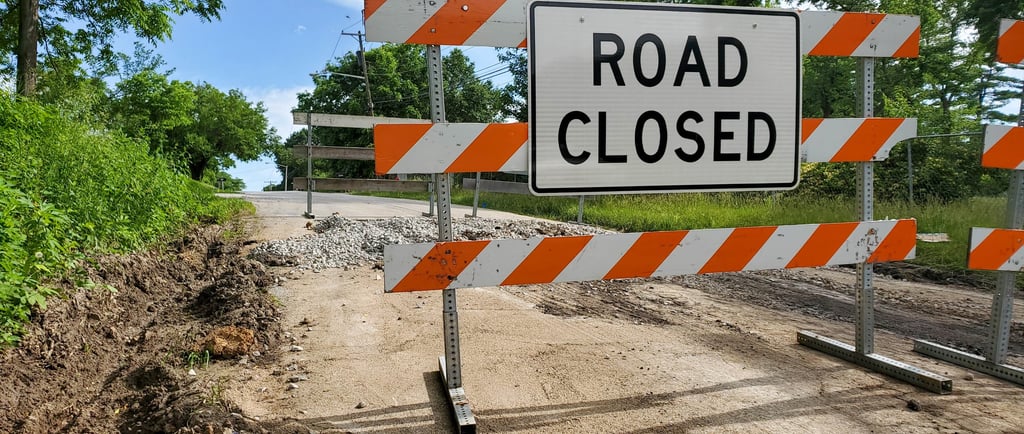
Community engagement is often treated as a communications task. Something that happens alongside the work or, in some cases, after the work has already started. In practice, engagement decisions are operational decisions. They affect schedules. They affect costs. They affect how smoothly crews and contractors can do their jobs in the field.
When engagement is planned early and intentionally, projects tend to move. When it is added late or handled reactively, the operational impacts are unavoidable.
Engagement shifts work upstream or downstream
One of the clearest operational impacts of engagement decisions is where the work shows up. When engagement is planned early, effort is concentrated upstream. Questions are anticipated. Information is shared before disruption occurs. Adjustments are made while options still exist. When engagement is delayed, that same effort moves downstream. Questions surface once work is underway. Field staff become the default point of contact. Project managers and supervisors are pulled into reactive problem-solving.
The total amount of work does not change. It simply shifts to a more expensive and disruptive point in the process. This is a capacity issue as much as it is a communications issue.
How late engagement disrupts operations
Most engagement-related operational challenges are not dramatic. They are cumulative. Crews arrive on site to find residents or businesses unaware of access changes. Work pauses while explanations are given. Supervisors step in to manage frustration that could have been addressed with advance notice.
Project managers are pulled away from coordination and delivery to respond to preventable questions. Field staff become messengers instead of focusing on the work. Schedules slip. Crews wait. Costs increase.
None of this happens because people failed to care. It happens because engagement decisions were not made early enough to support operations.
Early notice as operational protection
A phased service change provides a useful contrast. In one recent campaign, my Solid Waste Management team introduced a portion of the community to a cart-based trash and recycling collection pilot. This was new for our community. Its introduction came with a learning curve and a “why change?” mentality shaped by decades of anything-goes setout practices.
Research surfaced likely objections and the need for education early. As a result, notice was provided well in advance of implementation. Information was shared through multiple channels, expectations were clearly set, and residents knew what was changing and when.
Operational impacts during rollout were reduced. Calls and questions were more focused. Field staff were not routinely pulled into explanation mode. Adjustments that were needed were identified early, before they became disruptions.
Evaluation data reinforced what operations staff experienced in practice. Early notice reduced confusion, lowered reactive workload, and allowed teams to stay focused on execution.
That outcome was not accidental. It was the result of planning engagement alongside operations, not after the fact. That planning resulted in 76 percent of residents in the pilot area indicating they would like to see the program continue.
The challenge of long timelines and quiet periods
Many Public Works projects do not move cleanly from announcement to construction. They unfold over multiple years and budget cycles.
Early outreach may occur while a project is still conceptual, followed by long periods of design work, funding coordination, or regulatory review. From a staff perspective, the project never disappears. It remains active and tracked internally. From a resident or business perspective, it often does.
When communication goes quiet for a year or more, people reasonably assume the project stalled, changed, or went away. Or they simply forget about it while doing things like raising children, paying taxes, and going to work.
By the time construction begins, it can feel sudden, even if outreach occurred early in the process. Residents remember disruption, not timelines. When work starts without recent context, previous engagement no longer counts in their experience. And nor should it.
Why continuity matters as much as early notice
This is why engagement cannot be treated as a single moment tied only to construction start and end dates. For long-running projects, communication must continue through the quieter phases of design and funding, even when there is no visible activity. That communication does not need to be intensive. In many cases, a brief update confirming that the project is still moving forward is enough.
This is also where a structural challenge often emerges.
Communications funding, when it exists, is frequently tied to project budgets. Engagement is sometimes most needed before project funding is finalized, grants are awarded, or construction dollars are available. Yet the resources to support that early outreach may not be formally in place.
The result is a quiet period that is understandable internally but confusing externally. Organizations benefit from setting aside dedicated communications funding for early-stage outreach, separate from construction budgets. Even modest resources can support essential tasks like early notifications, periodic status updates, and expectation-setting while design and funding are still underway.
Those touchpoints preserve awareness. They reset expectations. They prevent the sense that work has appeared without warning. From an operational standpoint, continuity keeps engagement work upstream, where it is less costly and easier to manage. In long projects, silence creates risk. Consistent, low-level communication reduces it.
Engagement as risk management
Seen through an operational lens, community engagement is a form of risk management. It helps identify where friction is likely to occur before work begins.
It reduces surprises that interrupt construction or service delivery. It protects field staff from being placed in difficult situations with frustrated residents or businesses.
This is where discipline matters.
Frameworks like RPIE (Research, Planning, Implementation, and Evaluation), recognized as a best practice by the Public Relations Society of America, help teams apply structure before engagement begins. Research and Planning surface risks early. Implementation executes clearly. Evaluation allows teams to adjust without panic as conditions change.
Engagement is not about eliminating disruption. It is about preventing avoidable disruption. Proportional engagement protects schedules. Not every effort deserves the same level of engagement. High-impact projects warrant deeper outreach. Routine or low-impact work often requires clear information, not extended consultation. Treating everything the same can dilute attention and strain operational capacity.
For example, traffic volume is often used as a simple proxy for impact. A full street closure on a roadway carrying tens of thousands of vehicles per day presents a very different operational risk than work on a low-volume residential street. Higher-impact work may require advance notice, coordination with emergency services, business outreach, and multiple communication methods. Lower-impact work may only require standard notification and a clear point of contact.
Using impact-based criteria helps teams right-size engagement and protect schedules where disruption would be most costly.
Flexibility comes from evaluation, not reaction
Operational flexibility does not come from adding more engagement once problems appear. It comes from evaluating what is working and adjusting deliberately. Evaluation allows teams to refine messaging, change tactics, or increase engagement where needed without derailing operations. It turns engagement into a feedback loop rather than a series of reactions. That distinction matters in the field.
Leadership Takeaway
Community engagement is not separate from operations. It is part of operational planning. When engagement is planned early, maintained through long timelines, proportionate to impact, and supported by evaluation, projects move more smoothly, costs are more predictable, and staff are better supported.
The work does not get easier by ignoring engagement. It gets easier by planning it well.