
Communication as a Culture Change Driver
What a Fleet Maintenance turnaround at the Unified Government made clear.
Dave Reno
10/1/20254 min read
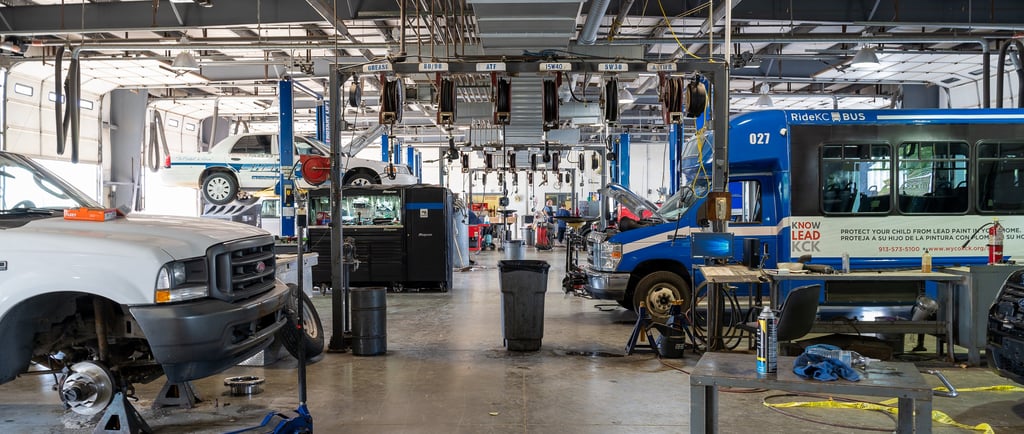
Fleet maintenance is easy to overlook when things are working. Vehicles are available. Repairs get done. Most people do not think about how the work happens or who is involved in decisions. Police cars arrive when needed. Ambulances are always running. Snowplows get the job done, and parks get mowed.
No one bats an eye because it works. And it works because fleet service teams across the country do their work at a high level on a regular basis.
Just because a team is not highly visible does not mean it requires less attention. In many cases, it requires more.
At the Unified Government of Wyandotte County and Kansas City, Kansas, a turnaround in Fleet Maintenance did not begin with a new piece of equipment or a major operational shift. It began with a change in communication. More specifically, it began with a change in who was involved.
This article explains how changes in communication and involvement drove a culture shift in Fleet Maintenance at the Unified Government, and why that approach can be applied by other public-sector leaders.
When top-down communication exists but involvement does not
For much of his career, Randy Hand worked in an environment where communication flowed one way. Randy spent nearly two decades in Fleet Maintenance. For years, he did not enjoy it.
“It was always negative,” he said. “Nobody wanted to be here. We didn’t work together, and you never really knew where you stood. Management told one person one thing and someone else something completely different.”
Decisions arrived without context. Expectations shifted. Input from technicians was not part of how decisions were shaped. Over time, that kind of environment wears people down. Randy felt that personally. He made excuses not to come to work. Things deteriorated to the point that he was suspended for absenteeism and nearly lost his career.
From the outside, this could have been framed as an individual performance issue. Inside the organization, it reflected something broader. Communication was happening, but involvement was not.
What changed
The shift did not happen overnight. It started when leadership changed how communication worked inside Fleet Maintenance. Instead of relying on directives, supervisors began asking questions. They listened. They invited technicians into conversations about how the shop operated.
Randy noticed the difference immediately. “I was just a tech who had lost motivation,” he said. “But they started asking for input, and for the first time in a long time, I felt heard.”
That shift mattered because it was real. Ideas shared by technicians began influencing actual decisions. Communication was no longer just about receiving information. It became a way to shape outcomes.
As involvement increased, expectations became clearer. Accountability changed. Standards rose because people understood them and had a hand in defining them. “When the culture started changing, I changed too,” Randy said. “It made me want to show up again.”
How culture followed communication
As communication shifted toward involvement, the culture inside Fleet Maintenance began to change. People started talking to each other. They helped each other. When someone had an idea, others listened.
“We’re not just showing up for a paycheck anymore,” Randy said. “We’re part of something.”
Those changes created the conditions for improvement. Regular team meetings gave technicians space to weigh in on equipment purchases, training needs, and shop processes. More than 80 percent of the team participated in optional training opportunities. Technicians began attending recruitment events to help attract future talent.
Modernization followed, but it worked because the culture supported it. Diagnostic laptops became standard. Alignments moved in house. Investments in tools and technology renewed pride in the work.
“We didn’t even have laptops before,” Randy said. “Just code readers. If something needed programming, it went out the door. Now we do it in house, and that matters to the technicians.”
Key takeaway
At the Unified Government, improvements in Fleet Maintenance followed a shift in how communication worked. When leaders involved employees in decisions instead of only informing them, culture improved and performance followed. This approach is transferable to other public-sector teams.
Leadership takeaway: How communication drives culture change
For leaders, the lesson from Fleet Maintenance is practical and repeatable.
The culture shift did not come from a single initiative. It came from deliberate communication choices that changed how people were involved in the work. Several of those choices are worth calling out because they are actions other leaders can take.
First, leaders made time for one-on-one conversations.
Randy emphasized that real change started when supervisors took the time to know the people they worked with. Not to correct them or manage them, but to understand them. Those conversations built trust before expectations were raised.
Second, input was invited early and taken seriously.
Technicians were asked for their perspectives before decisions were finalized. More importantly, they saw their ideas reflected in outcomes. That follow through signaled that involvement was real.
Third, regular team meetings created shared ownership.
These meetings were not status updates. They were working sessions where participation was expected and valued.
Fourth, expectations became clearer and more consistent.
Accountability worked because people understood what was expected and why.
Finally, leaders reinforced involvement through action.
Inviting new employees to lunch on their first day, encouraging technicians to attend recruitment events, and supporting optional training all sent the same message. You belong here, and your contribution matters.
The Fleet Maintenance turnaround did not happen because people were told to care more. It happened because leaders changed how they communicated and who they invited into the work.
That is a choice leaders can make. That is a choice you should make.
This work was documented more formally in an article published by the American Public Works Association in September 2025.